How Safe Is Mintos? Regulation, Investor Protection & Taxes in Check (Deep Dive 2/5)
Part 2 of my Mintos deep dive tackles the most important question of all: how safe is the platform? I walk through Notes & insolvency, the MiFID II licence supervised by the Latvian central bank, the €20,000 investor compensation scheme, the 60-day buyback obligation, the track record (2022 was even –1.2%) and the tax quirk around Latvian withholding tax – honestly, with a clear line on what protects you and what doesn't.
Table of contents
- Point 1: Who owes you your money – and what happens in an insolvency?
- Point 2: The MiFID II licence and supervision by the Latvian central bank
- Video
- Point 3: The investor compensation scheme up to €20,000
- Point 4: What actually protects you – and what doesn't
- Point 5: The track record – including the bad years
- Point 6: Taxes on Mintos – the quirk of a foreign platform
- A good moment right now: up to €500 bonus
- Conclusion: how safe is Mintos really?
- FAQ
When investing, many people only ever look at the return. Yet an equally decisive factor is: how safe is the platform I'm actually investing on? That's exactly what today's part 2 of my Mintos deep dive is about. We'll look at Mintos in detail – how safe the platform is, how it's regulated, what happens in the event of defaults, and how taxation works with a foreign platform.
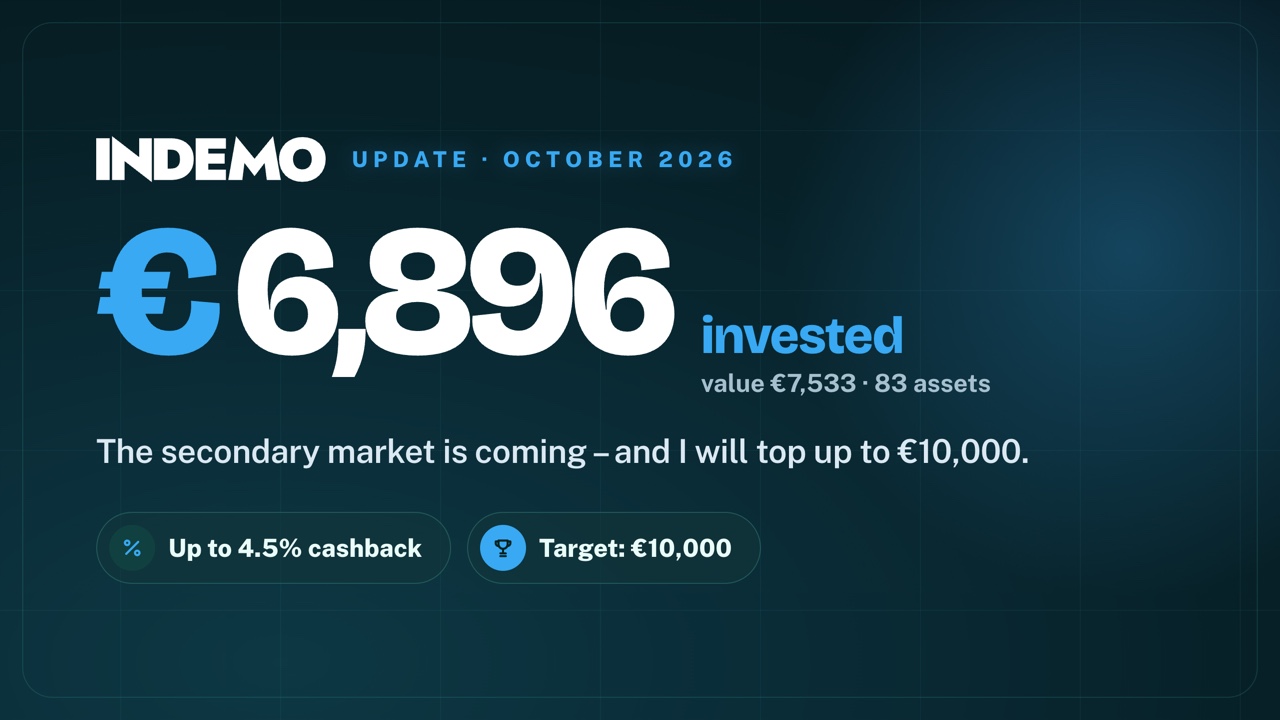
A quick bit of context: I've been investing on Mintos for over five years and hold a portfolio of more than €13,000 there – so I've seen a fair bit. As always, the important note first: this is not investment advice and not a buy recommendation. I only show my personal opinion and my personal investments. I'm responsible for my money, you for yours. Be aware of the risks of investing – with P2P they are considerable, and a total loss is possible.
Point 1: Who owes you your money – and what happens in an insolvency?
For me this is one of the most interesting points of all. With many classic P2P platforms you lend your money directly to the platform. If that platform goes bankrupt, you have a real problem: your capital ends up in the insolvency pool and you're one of many creditors.
With Mintos* it's fundamentally different. When you invest in loans here, you don't simply lend the money to Mintos as a platform – you invest in regulated Notes. These are securitized securities. Should Mintos go bankrupt as a platform, that's initially secondary for your claim – because your claim sits within the Notes and is not directed against Mintos.
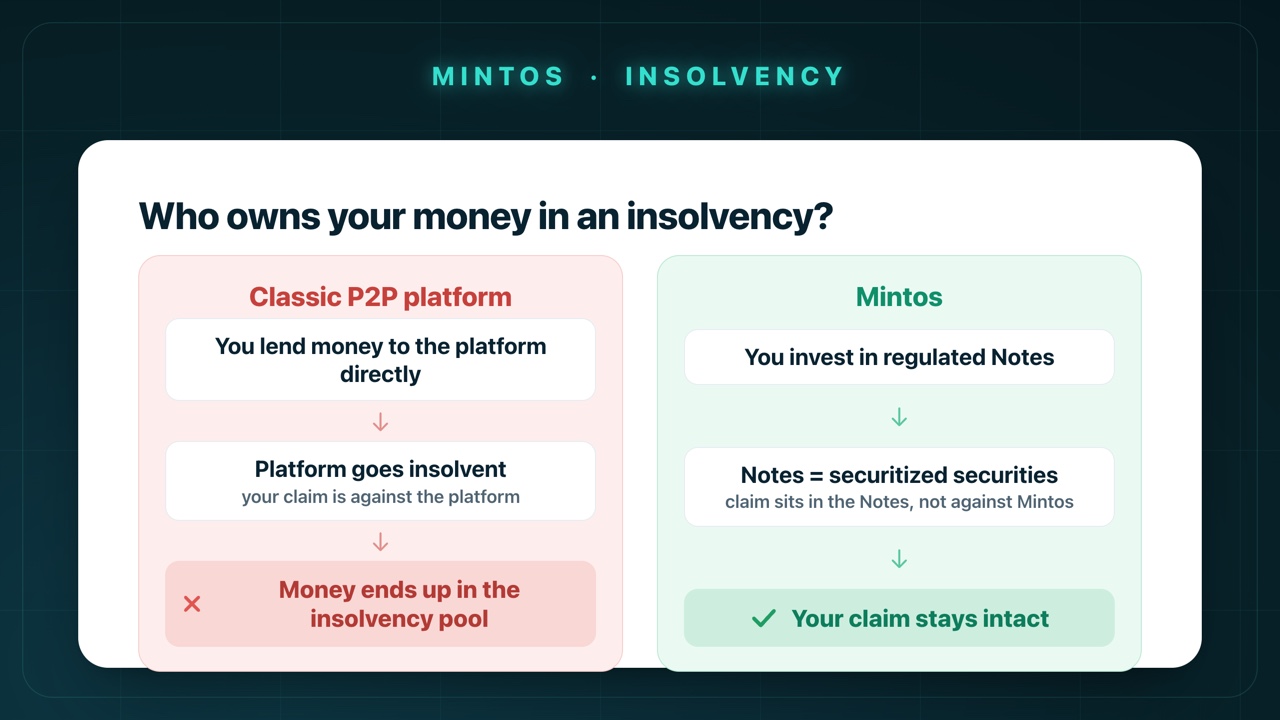
To be fair: delays and extra effort can still happen. But the fact that your claim isn't tied directly to the platform is a genuinely strong point – and an important difference from many other providers.
Point 2: The MiFID II licence and supervision by the Latvian central bank
The second point is the licence. Mintos* is regulated in the EU under the MiFID II standard and supervised by the Latvian central bank (Latvijas Banka). This licence is a real exclamation mark, because it forces Mintos to meet a number of requirements that benefit us as investors.
What does the licence mean in practice? It means Mintos has to comply with very strict rules and is monitored continuously. The key points:
- Investor funds are held separately from company assets.
- There are clear rules on how the securities must be handled.
- Mintos has disclosure and reporting duties and is supervised the whole time.
Very important for context: this MiFID II licence creates a regulated environment with monitoring and firm rules. But it does not protect against credit default risk – that has nothing to do with regulation. No regulation in the world protects you from the investment risks that exist everywhere.
Video: How Safe Is Mintos? Regulation, Investor Protection & Taxes in Check (Deep Dive 2/5)
This is part 2 of my Mintos deep dive – in the video I go through safety, regulation and taxes point by point. Feel free to watch, or keep reading below.
Point 3: The investor compensation scheme up to €20,000
The third point ties directly to the regulation. Because Mintos* is a regulated investment firm, there's an investor compensation scheme of up to €20,000. This applies to investors from any EU country of residence – including us in Germany.
But here comes the most important part for context: these €20,000 protect you if, for example, Mintos goes bankrupt, fails to release funds for some reason, or if there's a case of fraud. It is not a state deposit guarantee like the €100,000 we have on a bank account. Again: these €20,000 are an additional layer of protection, but they do not cover you against credit, default or currency risks. You simply have to be aware of that.
Point 4: What actually protects you – and what doesn't
Let's briefly summarise the concrete protection mechanisms Mintos* brings: Mintos is a regulated investment firm, must keep investor funds segregated, has the investor compensation scheme, and the investment products are all regulated in the form of securities.
What Mintos does not take off your shoulders is the credit risk. If individual loans on the marketplace default, that risk stays with you – and neither the regulation nor the compensation scheme helps there. This is where you come in: diversify broadly, don't bet everything on a single loan originator.
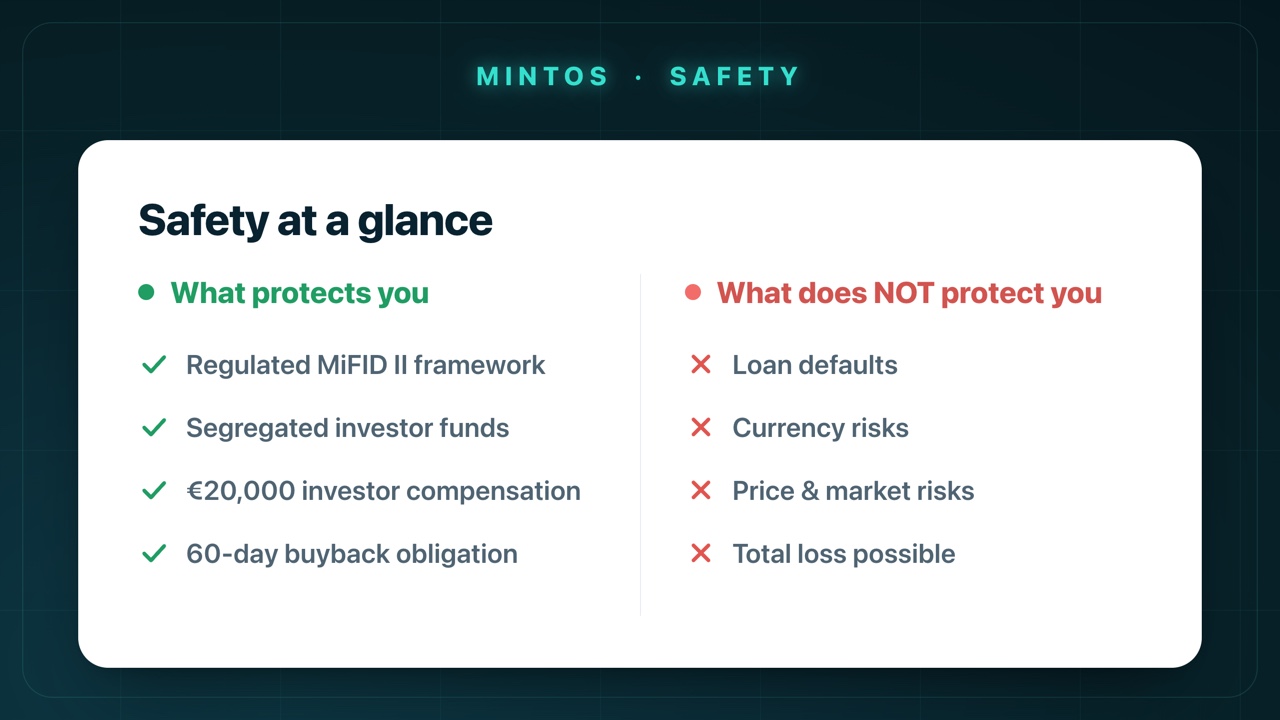
There is, however, one more protection mechanism on many loans: the 60-day buyback obligation. If a loan is 60 days overdue, the loan originator must buy back the note – and you get your money back. That's a pretty good extra layer. But beware: if the entire loan originator gets into trouble, you can still be left sitting on your money.
What does this mean in the end? Mintos operates within a very regulated framework and is soundly set up. But for the safety of your portfolio you still have to look after it yourself – the key word being diversification. You should never park 100% of your money in P2P or on a single platform. And even on Mintos you can spread further: into loans, bonds, real estate, ETFs, crypto ETPs and more. On loans alone you can invest in hundreds of different loan packages – I myself am invested in over 6,000 different loans.
Point 5: The track record – including the bad years
The next point is Mintos*' track record. The platform has been around for a very long time, and it lays out its numbers openly – for good years, but also for bad ones. That's exactly what I find so positive.
Looking at the average net annual returns, we see strong years like 2023 with 10.4% and 2024 with 9.3%. But there was also the crisis year 2022 – with a loss of 1.2%, mainly due to the fallout from the war in Ukraine.
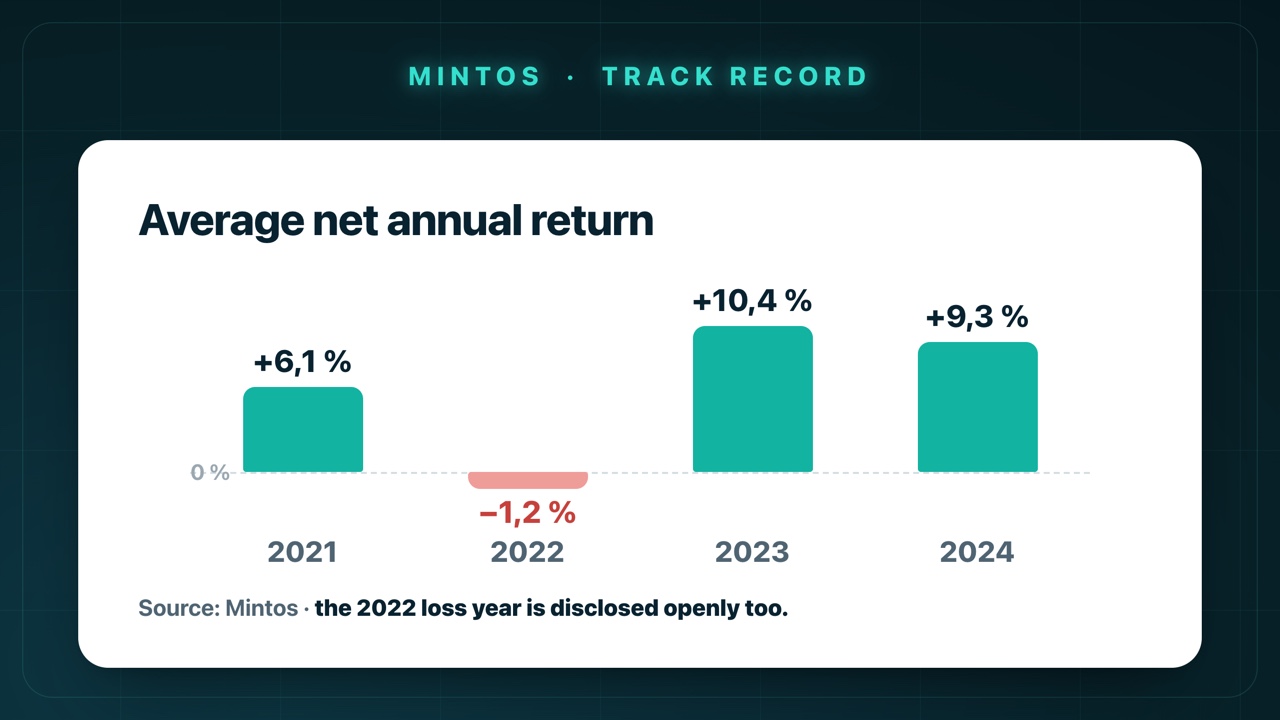
Of course, a loss year is never nice. But we know the same from the stock market with its price swings. What matters far more to me is that the provider handles it transparently and publishes it all – because then you get a much more realistic picture of what you're getting into. (For context: Mintos defines net return as the annualized gross return minus the annualized loss rate.)
Point 6: Taxes on Mintos – the quirk of a foreign platform
The sixth point, for me, also belongs to the topic of safety: taxes. Because there's a quirk here. Mintos* isn't based in Germany but in Latvia. For us German investors that means: we have to handle the tax ourselves.
With a German broker like Trade Republic or Scalable Capital, the flat capital gains tax (25% plus solidarity surcharge) is automatically forwarded to the tax office. With Mintos it's different: there you receive your return gross and have to handle the taxation yourself.
The second point is the Latvian withholding tax. By default Mintos withholds 25.5% withholding tax. As a German investor, though, you can reduce this to 5%. To do so, you go once into settings → tax details and confirm that you invest as a private person and are tax-resident in Germany. You should really do this right at the start so that no unnecessary withholding tax is deducted.
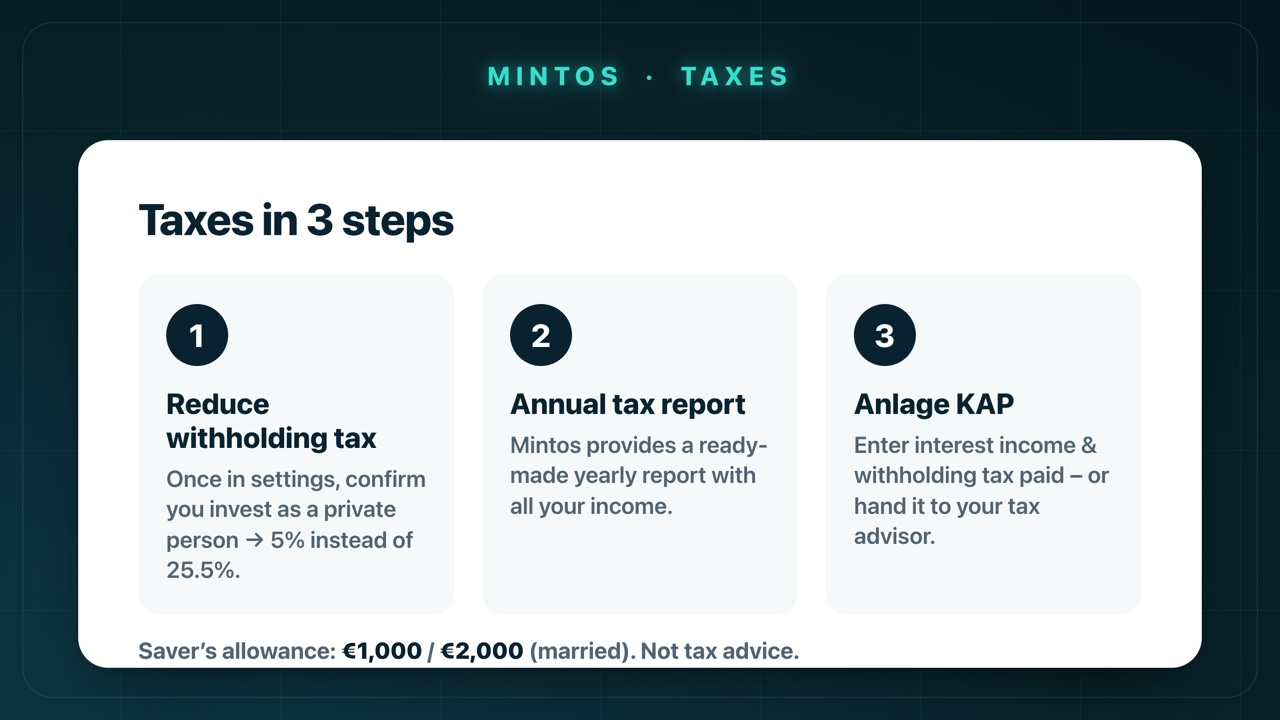
Important to understand: you don't pay twice. We have the 5% withholding tax from Latvia and technically owe 25% tax in Germany – but the 5% are credited against the 25% in Germany. You just have to make sure it reaches the tax office yourself.
And how does that work? Fairly simply. Every year Mintos gives you a tax report listing everything. You either hand this report to your tax advisor – or, if you do your tax return yourself, you enter the figures via Anlage KAP: the interest income received and the withholding tax already paid. Keep in mind the saver's allowance (Sparer-Pauschbetrag) of €1,000 (single) or €2,000 (married) – tax only applies above that.
Important note: I'm of course not a tax advisor. These details are without warranty – please clarify them with your tax advisor.
A good moment right now: up to €500 bonus
If you want to try Mintos* yourself, right now is a genuinely good time: via my link with the code INVEST26 there's currently a tiered welcome bonus of up to €500 – until 30 Sept. The exact bonus depends on your invested amount. Otherwise the maximum is up to €350 (with the code GO-LENNARD).
| Cumulative investment | Bonus |
|---|---|
| from €1,500 | €20 |
| from €2,500 | €35 |
| from €5,000 | €75 |
| from €10,000 | €175 |
| from €25,000 | €500 |
I've summarised all the details, deadlines and eligible products in a dedicated article: Mintos INVEST26 in detail.
For transparency: this is a referral link. If you sign up through it, I receive a small commission – it doesn't cost you more. On the contrary, you secure a bonus you wouldn't otherwise get, and you support my channel.
Conclusion: how safe is Mintos really?
For me the conclusion is clear: Mintos* operates within a regulated framework with a MiFID II licence. Investor funds are held separately from company assets, there's the €20,000 investor compensation scheme, investing in loans runs through securities (an additional safety building block), and at the investment level many loans carry the 60-day buyback obligation.
This whole regulated framework provides safety – but it does not protect against the credit risks that simply exist. The 60-day buyback obligation is a bonus too, but ultimately it's no guarantee against losing money. That must always be clear.
What I genuinely appreciate is that Mintos deals openly with the bad years – you can view everything transparently. The main thing to keep an eye on is the tax topic, because you have to declare the income yourself. But that's only half as bad: take the tax report, hand it to your tax advisor or enter it in Anlage KAP – done.
That was part 2, on safety and regulation. In the next parts of the deep dive we'll look at the pros and cons in detail, which products there are and how I invest specifically. If you missed the start: in part 1 I transparently show my complete Mintos portfolio.
Now I'm curious about your view: are you invested in Mintos yourself, and what have your experiences been? Let me know in the comments. You'll find all current P2P promotions bundled in my P2P bonus overview.
Frequently asked questions
How safe is Mintos?
Mintos operates within a heavily regulated framework: the platform is licensed as an investment firm under MiFID II and supervised by the Latvian central bank (Latvijas Banka). Investor funds are held separately from company assets, investments run through regulated Notes (securities), there's an investor compensation scheme of up to €20,000, and many loans carry a 60-day buyback obligation. But this framework does not protect against the actual investment risk: loans can default, and a total loss is possible.
What happens to my money if Mintos goes bankrupt?
Unlike many classic P2P platforms, you don't lend your money directly to the platform. You invest in regulated Notes – securitized securities. Should Mintos go insolvent as a platform, your claim stays within these Notes and is not directed against Mintos itself. So your capital doesn't simply end up in an insolvency pool. Delays can still occur, though.
Is Mintos regulated?
Yes. Mintos is regulated as an investment firm under MiFID II in the EU and supervised by the Latvian central bank (Latvijas Banka). The licence forces Mintos to meet strict requirements: segregated custody of investor funds, firm rules for handling the securities, disclosure and reporting duties, and ongoing supervision.
What is the €20,000 investor compensation scheme?
Because Mintos is a regulated investment firm, there's an investor compensation scheme of up to €20,000. It applies to investors from any EU country of residence, including Germany, and protects against cases such as fraud or misappropriation – if Mintos fails to release your funds for regulatory reasons. But it is NOT a state deposit guarantee like the €100,000 on a bank account, and it does not protect against loan defaults or price/currency risks.
What was Mintos' track record in recent years?
Mintos publishes its average net annual returns transparently – including the bad years. In 2023 the average return was 10.4%, in 2024 it was 9.3%. In the crisis year 2022 there was a loss of 1.2%, mainly due to the fallout from the war in Ukraine. The fact that a provider openly reports a loss year too is a real plus for me.
How does tax work on Mintos for German investors?
Mintos is based in Latvia, not Germany – so you have to handle taxation yourself. Returns are paid out gross. By default Mintos withholds 25.5% Latvian withholding tax; as a German private investor you can reduce this to 5% via the settings (tax details). Those 5% are credited against German tax, so you don't pay twice. You declare your income via the annual tax report in your German tax return (Anlage KAP) or hand it to your tax advisor.
How do I reduce Latvian withholding tax on Mintos to 5%?
In your Mintos account, go to settings and open tax details, then confirm that you invest as a private person and are tax-resident in Germany. After that Mintos withholds only 5% instead of 25.5%. You should do this right at the start so that no unnecessary withholding tax is deducted.
Disclaimer
⚠️ Not investment advice
All content is for information and entertainment purposes only and does not constitute investment advice, a buy recommendation or an invitation to enter into a financial product. Please do your own research and make decisions based on your personal situation and risk tolerance.
📉 Risk warning & total loss
Investments in securities and other financial instruments generally carry significant risks (e.g. price, market, currency, volatility and credit risks). A total loss of the capital invested cannot be ruled out.
📊 Returns & forecasts
All performance figures, whether historical or as a forecast/estimate, are not a reliable indicator of future results. Capital and returns are not guaranteed.
🔍 Transparency & conflicts of interest
I strictly distinguish between facts and personal estimates. Important: I am often invested in the assets discussed myself, which can create a conflict of interest.
✅ DYOR (Do Your Own Research)
All information has been compiled carefully but is non-binding, without warranty and without any claim to completeness. Please inform yourself thoroughly and consider all opportunities and risks in depth before making an investment decision.
Advertising & affiliate notice
Links marked with * are advertising or affiliate links. If you sign up or buy something through such a link, I may receive a commission – at no extra cost to you. This supports my work.